
Category: Science
-
How Should Youth Swimmers Train? Olympic Gold Medalist Explains | Unfiltered Waters Podcast
If you were building a swim program from age 8 all the way to pro, how much volume would you give young swimmers? Katie Hoff Anderson puts that question to Cam McEvoy, the Olympic champion and world record holder in the 50 freestyle, and his answer challenges how much volume the sport asks of kids.…
-
Anomaly: Inside Caeleb Dressel’s Performance Testing | Road to 2028 | Aquatic Sports Performance
Dr. Eva, Steve Jungbluth, Sean Kao, and Dr. Josh Lo come together to test for the upcoming season.
-
Every Body Build Explained – What Sport Each One Wins At | Knowing Noah
There are seven ways a human skeleton gets built, and most people never find out which one is theirs. Your shin against your thigh, your legs against your torso, how wide your frame runs at the shoulders — these bone proportions decide what your body was built to do, and no amount of training changes…
-
Scientists Found a 2X Faster Freestyle Catch Technique | Siska Training Systems
In this video, Lukas Siska explains what actually creates real speed in swimming, How to get max power in freestyle and top swim tips huge for performance. Whether you are a beginner or elite you will find this video helpful.
-
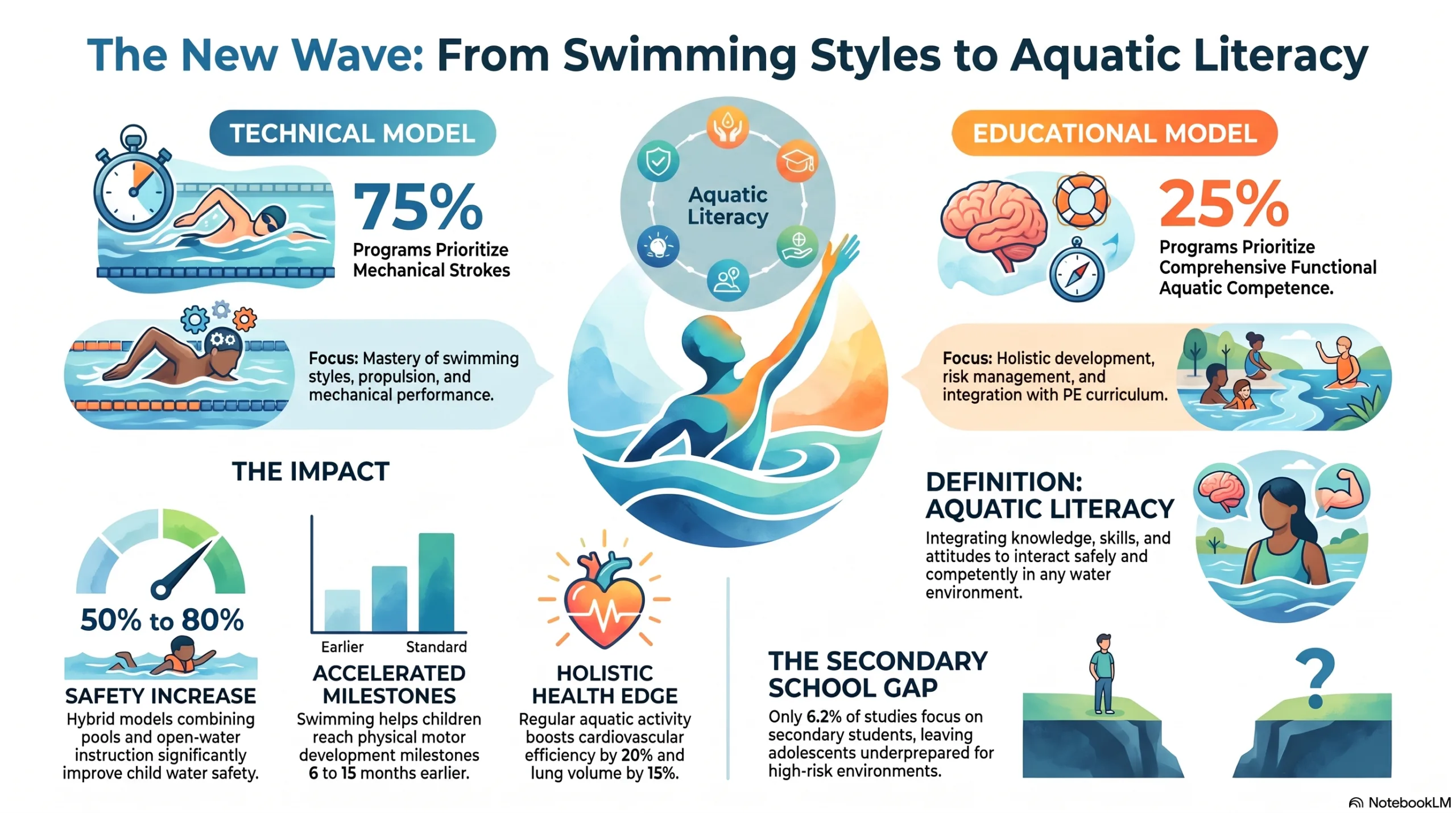
Beyond the Breaststroke: Why Your Child’s Swimming Lessons Might Be Missing the Point
For most parents, watching a child complete their first length of the pool is a milestone marked by a profound sense of relief. We operate under the comforting assumption that “learning to swim”—mastering the basic mechanics of a stroke—is the same thing as being safe in the water. However, the data suggests this technical focus…
-
No, Eating Before Swimming Doesn’t Impact Drowning Risk | KVUE
Eating before swimming doesn’t add to the risk of drowning, according to scientific literature reviewed by the American Red Cross.
-
The Future of Humans Living Underwater | BBC News
Ocean engineering and technology company DEEP is on a mission to make humans aquatic, which is why it’s setting up an underwater training facility in Chepstow. The 50-acre site, with a controlled body of water, will be dedicated to saturation diving – a technique that allows people to live and work underwater for longer.
-
Why Dolphins Swim So Fast: The Secrets of Hidden Whirlpools | Phys.org
In an article published in Physical Review Fluids, researchers from The University of Osaka have uncovered a key part of the answer: large, powerful vortices created by the movement of the dolphin’s tail. The research team used large-scale numerical simulations to visualize the dynamics of these vortices across a wide range of conditions, quantifying their effect on propulsion.…
-
Mines Swimmer Working With NASA to Bring Life to the Moon | 9NEWS
Charlie Krone is preparing for the NCAA championships in the pool and life on the moon!