
Category: Science
-
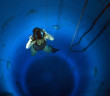
The Science of Freediving: Your Body’s Amazing Reaction To Water
Read ideas.ted.com In 1949, a stocky Italian air force lieutenant named Raimondo Bucher decided to try a potentially deadly stunt off the coast of Capri, Italy. Bucher would sail out to the center of the lake, take a breath and hold it, and free-dive down one hundred feet to the bottom. Waiting there would be…
-

Hats Off: Students find ways to make duct tape and cardboard poolworthy
Read Lubbockonline Seven boats constructed only of careboard and duct tape raced across the Pete Ragus Aquatic Center recently in the first Texas Tech/Lubbock Independent School District STEM challenge. The boats were all occupied by four middle school students. The O.L. Slaton team won the competition.
-

Study Shows Swimmers Gain An Advantage When They Recover With Chocolate Milk
Read USA Swimming Grabbing chocolate milk after a hard swim could give swimmers a performance edge, according to new research presented at one of the nation’s top sports medicine conferences – the American College of Sports Medicine’s annual conference. In a sport where seconds and even tenths of a second can make a big difference…
-
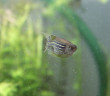
Getting fish drunk doubles its swim-speed
Read The Times Of India A single zebrafish, exposed to alcohol, not only doubles its swim-speed among its “sober” peers, but also increases the speed of the whole group, a new study has found. New findings by researchers at the New York University Polytechnic School of Engineering are helping to unravel the complex interplay between…
-
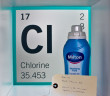
There’s more to chlorine than just swimming pools
Listen to Marketplace It keeps your pools clean and safe, it’s half of the compound that makes up table salt, and — in its purest form – it can kill you. And those are only three of the things chlorine can do. “There are something like 15,000 chlorine-based chemicals that are used in industry,” says the BBC’s Justin…
-

David Epstein: Are athletes really getting faster, better, stronger?
See TED When you look at sporting achievements over the last decades, it seems like humans have gotten faster, better and stronger in nearly every way. Yet as David Epstein points out in this delightfully counter-intuitive talk, we might want to lay off the self-congratulation. Many factors are at play in shattering athletic records, and…
-

The Scientific Secret To Swimming Faster
According to USRPT Helpful research links:http://www.ncbi.nlm.nih.gov/pubmed/20…http://onlinelibrary.wiley.com/doi/10…http://bjsportmed.com/content/13/4/16…http://www.getcited.org/pub/103342732http://coachsci.sdsu.edu/csa/vol21/bu…http://coachsci.sdsu.edu/swim/bullets…http://www-rohan.sdsu.edu/dept/coachs…http://onlinelibrary.wiley.com/doi/10…http://coachsci.sdsu.edu/swim/trainin…USRPT Discussion Forums:Â http://usrpt.com/forums/
-

The Morning Swim Show on Shoulder Surgery Risks
In light of the tragic news of Ian Thorpe’s infection after shoulder surgery, host Jeff Commings speaks with USA Swimming team physician Dr. Scott Rodeo about treating shoulder injuries and lowering the risk of infection.
-

New research suggests 3-5 min of 30s sprints as healthy as 1 hour at moderate speed
See the research article on Hindawi A new study performed in the Faroe Islands suggests that it is as effective for cardio-vascular health to do 3-5 minutes of (effective) high-intensity swimming, as it is to swim for an hour at a more moderate pace. To test the hypothesis that high-intensity swim training improves cardiovascular health…